
Semiconductor Manufacturing Economics
Are you concerned about securing a fair price for semiconductors, including foundry wafers?
In the ever-evolving landscape of the semiconductor industry, grasping the intricate economics of semiconductor manufacturing has never held greater significance. Gaining visibility into production necessitates a comprehensive understanding of the entire supply chain.
TechInsights’ Semiconductor Manufacturing Economics is the industry standard for cost and price modeling of semiconductors. Semiconductor Manufacturing Economics allows you to:
- Negotiate more effectively and leverage insights of the end-to-end semiconductor cost structure
- Reduce purchasing prices improving your company’s profitability
- Assess and improve performance leveraging benchmarking data
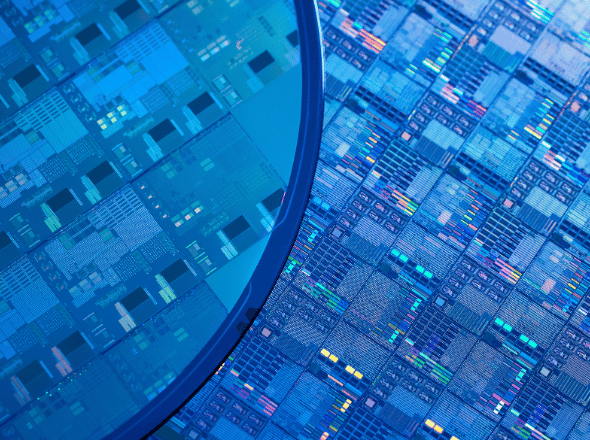
Get unique and detailed insights into the semiconductor supply chain and understand this evolving landscape using TechInsights’ industry-leading business analysis tool
Market Analysis Solutions





End Market Analysis:






The Semiconductor Manufacturing Economics Advantage
Semiconductor Manufacturing Economics gives organizations unique and detailed insights into the semiconductor supply chain. IDMs, foundries, fabless, electronics systems, automotive companies, equipment OEMs and materials suppliers, analysts, universities, and start-ups can all harness the value included within Semiconductor Manufacturing Economics.
Learn about TechInsights’ comprehensive portfolio of semiconductor cost and price modeling tools included within Semiconductor Manufacturing Economics:
This model enables users to easily estimate the manufacturing cost and selling price of most integrated circuit testing and assembly operations. It includes:
- Cost and price for assembly and test of semiconductors
- Unit cost and price, materials requirements, and equipment requirements
- Cost and price by process, volume, and date from 2010 to 2035
TechInsights’ Assembly and Test Cost and Price Model is the world’s most advanced assembly and test model.
This model enables users to easily estimate the cost and selling price of high-power silicon and compound semiconductor integrated circuits and discrete devices. It includes:
- Wafer fabrication, test, and packaging costs
- Coverage of 100mm to 300mm wafer sizes
- Cost (manufacturing cost) and price (selling price) estimates for a wide range of semiconductors
- Cost and price by volume and date from 2015 to 2030
TechInsights’ Discrete and Power Products Cost and Price Model is the industry standard model for cost and price estimation.
This model enables users to easily estimate the cost and selling price of low-power silicon integrated circuits. It includes:
- Wafer fabrication, test, and packaging costs
- Coverage of technologies from 3μ m technologies on 100mm wafers to the latest state-of-the-art technologies on 300mm wafers
- Cost (manufacturing cost) and price (selling price) estimates for a wide range of semiconductors
- Cost and price by volume and date from 2015 to 2030
TechInsights’ IC Cost and Price Model is the industry standard model for cost and price estimation.
This model enables users to explore past, current, and future technologies from the three leading producers in four segments: DRAM, Foundry and IDM Logic, and NAND. The model is a wafer cost and price model only and produces detailed wafer costs, equipment sets, and materials. It includes:
- Cost and price for leading edge 300mm wafer processes
- A detailed technology roadmap for 3D NAND, DRAM and Logic, and equipment and materials requirements
- Cost and price by process, volume, and date from 2000 to 2035
TechInsights Strategic Cost and Price Model is the world’s most advanced wafer costing model.
This database covers over 95% of total fab capacity and contains all 150mm, 200mm, and 300mm wafer fabs both current and planned. It includes:
- Consistently updated details of locations, key dates, partners, capital investments, incentives, nodes, products, capacity (from 2010 to 2023), and more.
- Several analysis graphs of capacity by product, company, country, and more
- Insights from the IC and Power models


The authoritative information platform to the semiconductor industry.
Discover why TechInsights stands as the semiconductor industry's most trusted source for actionable, in-depth intelligence.